



Why Choose APPORO CNC Services?
APPORO is a Taiwan OEM partner for precision CNC machining—delivering tight-tolerance metal and plastic parts, practical DFM feedback, and stable quality for global buyers who need reliable production, not just a quote.
How to use this page: treat it as APPORO’s trust and decision hub. For commercial search topics such as CNC turning or milling parts, start from the service pages below; use this page to understand how we quote, communicate, and control quality from first article to ongoing production.
Explore related pages:
- CNC Turning Services — custom turning parts and Swiss-type / chucking capability
- CNC Lathe Machining Parts — turned-part showcase
- CNC Milling Machining Parts — milled-part showcase
- Case Study — published machining project reviews
- RFQ or QuoteBOT — send drawings for a project review
Below is why engineering and purchasing teams choose APPORO for CNC milling, CNC turning, and related manufacturing services.
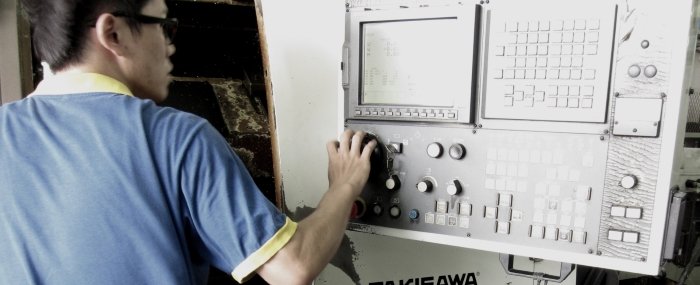
CNC Machining Advantages with APPORO
CNC (Computer Numerical Control) machining lets us produce precise, repeatable parts from metals and plastics with controlled tolerances and consistent process capability. For OEM and industrial buyers, the value is not only machine accuracy—it is stable quoting, clear communication, and a production flow that scales from prototype to volume.
APPORO supports industries such as automotive, medical devices, electronics, lighting, robotics, and industrial equipment. Whether you need CNC milling parts, CNC lathe parts, or a hybrid process route, we help you balance precision, lead time, and total cost.
For part-type detail, see our CNC Turning Services, CNC Milling Machining Parts, and CNC Lathe Machining Parts pages. Published process lessons are in our Case Study library.
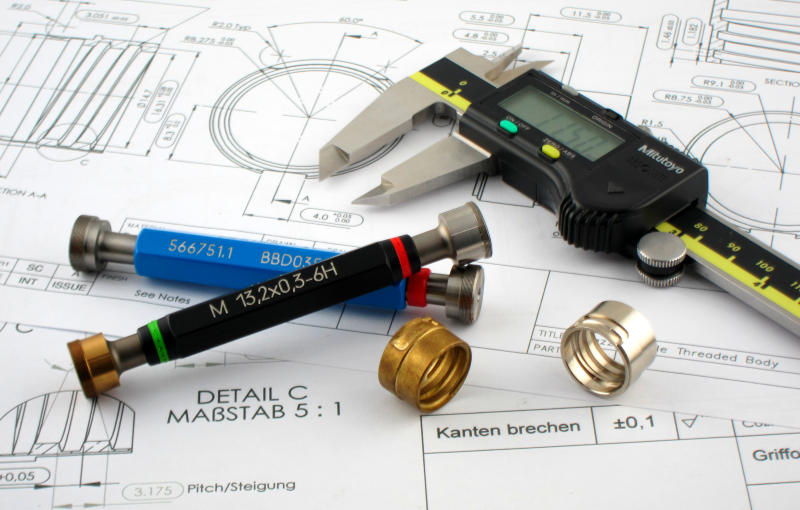
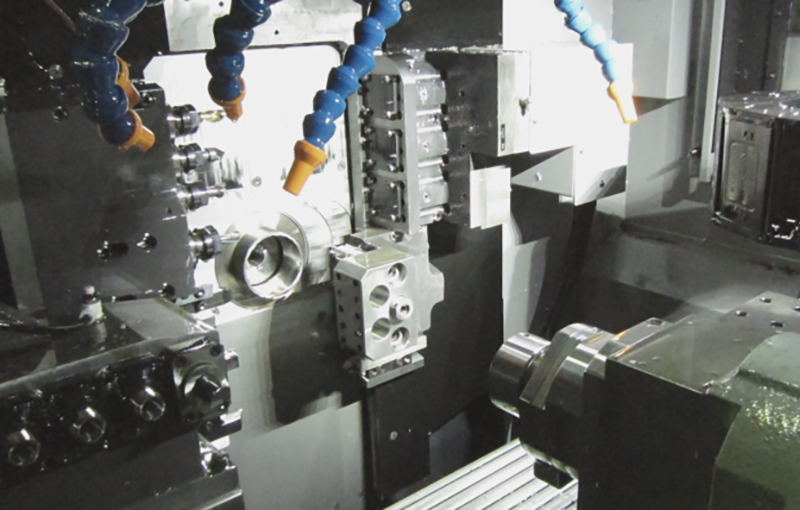
High Precision and Accuracy
Our CNC processes are set up to hold critical dimensions consistently. With proper fixturing, tool selection, and inspection, we help your parts meet drawing requirements and assemble correctly in the next process.
Efficient and Repeatable Production
Once programs and process parameters are proven, CNC machining can produce repeatable batches with stable cycle times—ideal for ongoing OEM demand and controlled cost per piece.
Flexible Part Geometry
From prismatic milled housings to turned shafts and fittings, CNC machining handles a wide range of geometries and materials. We also advise when stamping, die casting, or injection molding may be a better long-term route.
Cost Control for Real Production
We focus on manufacturability: material selection, tolerance strategy, secondary operations, and packaging. That reduces scrap, rework, and surprises after sampling—so landed cost stays predictable.
Ready to review a drawing? Send your 2D/3D files through our RFQ or try QuoteBOT for a faster starting point.
Quality Assurance and Professional Testing
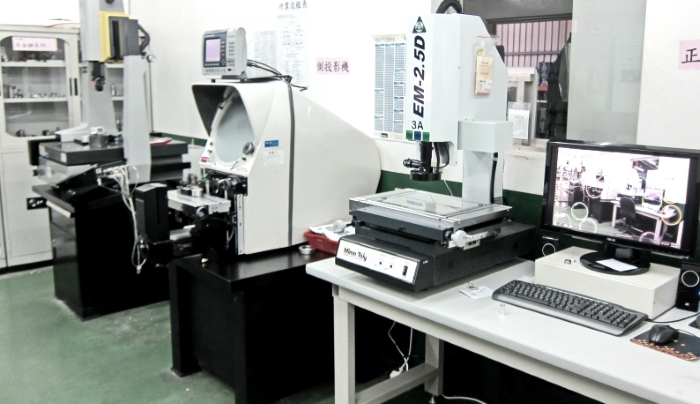
As a CNC machining manufacturer in Taiwan, APPORO treats quality as a managed process—not a final checkpoint. We calibrate key equipment, train operators, and apply stage-based inspections so issues are caught early, before they become shipment risks.
Where needed, we also work with qualified third-party laboratories for material or compliance verification, giving buyers clearer evidence for audits and incoming QC.
1. In-Process Quality Assurance
Every production lot follows controlled steps from programming and setup through machining and final check. Our quality team monitors critical dimensions and surface conditions at defined stages, so corrections happen while the process is still adjustable.
Inspection Equipment
- Sheffield Cordax Discovery D-8 DCC CMM
- Brown & Sharpe Hexagon Metrology CMM
- Vision Measuring Machine
- Baty R14 Profile Projector
- Other inspecting, measuring, and testing equipment
More about our inspection equipment
2. Strict Quality Control Process
We apply a clear SOP across each production run. Typical control points cover incoming material, in-process machining checks, and finished-part verification before packing and shipment.
Quality Control Process
- IQC (Incoming Quality Control)
- IPQCS (In-Process Quality Control Section)
- FQC (Final Quality Control)
- OQC (Outgoing Quality Control)
More about our quality control process
3. Non-Destructive and Destructive Testing
Depending on part function and customer requirements, we can arrange suitable verification methods—such as dimensional inspection, material certification review, or third-party testing—to support safety, reliability, and industry compliance expectations.
Professional CAD Drawing and DFM Support
Clear drawings reduce machining risk. APPORO helps customers prepare and review CAD data so manufacturing intent is unambiguous—tolerances, threads, finishes, and assembly interfaces included.
We commonly work with 2D PDF/DWG and 3D STEP / IGES / Parasolid files. If your design is still evolving, we can provide practical DFM comments before you lock the revision for production.
1. 2D and 3D CAD Drawings
We create or refine detailed 2D and 3D manufacturing drawings for precision parts and assemblies. The goal is a package your purchasing and engineering teams can approve quickly—and that our CNC programmers can execute without guesswork.
We prefer making parts from your 3D models
2. Part Design and Engineering Drawings
From a simple spacer to a multi-feature housing, we support part-level engineering drawings for automotive, electronics, industrial equipment, and more. Good drawings improve quote accuracy, first-article success rate, and long-term repeatability.
3. System Integration and Component Design
When a component must fit a larger assembly, we help align interfaces, fastening methods, and critical datums. That reduces fit-up issues later in your line and shortens the loop between design change and production update.
Professional Surface Treatment Consultation
Surface finishing affects corrosion resistance, appearance, wear life, and assembly behavior. APPORO helps you choose finishes that match material, function, and budget—before production starts.
Typical options include anodizing, electroplating, electroless nickel, powder coating, galvanizing, passivation, black oxide, and other engineered coatings. We also advise on plating allowance, masking, and thread/gasket areas that must stay unfinished.
Surface preparation matters as much as the coating itself. Cleaning, degreasing, and pre-treatment steps are planned so adhesion and appearance stay consistent lot after lot.
Post Processing
- Grinding / deburring / edge finishing
- Plating and coating
- Anodizing and conversion coatings
- Other functional or cosmetic finishing
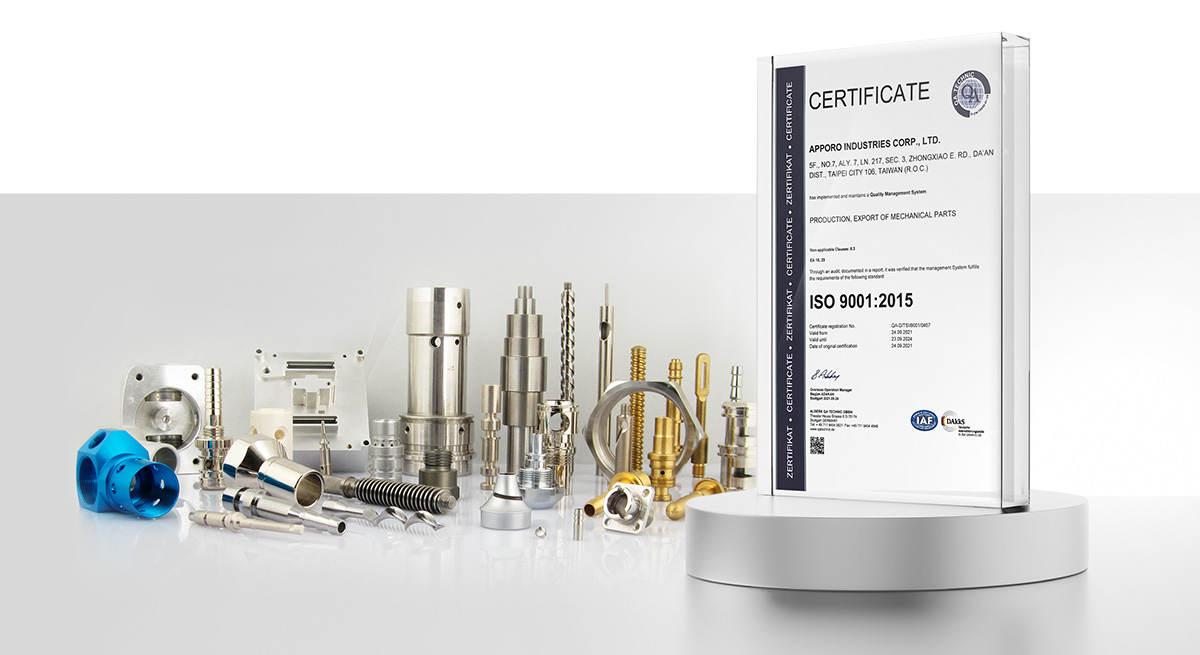
ISO 9001 Certification
APPORO operates under an ISO 9001 quality management system. We use documented processes for order review, production control, inspection, and corrective action—so quality improvements compound over time.
Success is the sum of small efforts, repeated day in and day out.
More about our ISO 9001 certification
RoHS Compliance and Inspection Reports
For many global customers, material compliance and traceable inspection data are as important as dimensional accuracy. APPORO can support RoHS-related documentation needs and provide project-based quality packages matched to part complexity.
Depending on the drawing and agreement, typical deliverables may include:
Quality Inspection Report Package
- Material certification
- Part drawing with marked item numbers
- Dimensional quality inspection report
- SGS report for RoHS compliance (when required)
- Surface treatment report
- Plating report
Production and Service Capability
APPORO combines CNC machining with complementary processes so you can source related parts from one OEM partner. Explore our core services and product showcase, or contact us for a project review.
Our Core Services
Product Showcase
Real Project Experience from Our Case Studies
These short notes come from published APPORO Case Study articles. They show how we handle DFM, fixturing, finishing, and post-process quality—not a re-telling of the turning-focused summaries on our CNC Turning Services page.
Fixturing and first-article correction on a long steel guide
In Fixing Misaligned Holes in a Steel Part, a low-carbon steel door support guide (1500 mm × 19.05 mm × 38.1 mm) needed five equally spaced countersunk holes along the narrow face. First-article inspection found misaligned holes. QC and engineering traced the cause to insufficient vise clamping on the long, slender part. The corrective setup used four vises along the length, verified straightness within 0.1 mm with a dial indicator before drilling, then redrilled so hole positions met specification and passed QC.
DFM review before a short external thread fails in assembly
In Design Challenges and Improvements for Threaded Component Assembly, a CNC part was specified with an M22×2.0 external thread only 3.0 mm long (about 1.5 turns) and no thread relief groove at a larger adjoining diameter. The write-up notes that incomplete threads can leave effective engagement at roughly one turn or less, and that ISO/ASME-style guidance of about 1–1.5× diameter engagement would imply far more length for M22. Proposed improvements documented in the article include increasing thread length to at least 6.0 mm, adding a relief groove, enlarging the mating internal-thread chamfer, and—where diameters allow—considering M21×1.5 for more turns in the same length.
QC catch after galvanizing CNC milling parts
In Rust Formation in Threaded Blind Holes Post-Galvanization, APPORO’s QC team found yellow rust at the edges of threaded blind holes on CNC milling parts returned from a galvanizing supplier. The article links the issue to residual process chemicals/moisture that were not fully dried inside non-through holes, and records improvement measures such as stricter drying of cavities, chemical neutralization, hole-focused inspection before release, optional protective coating inside blind holes, and controlled storage/transport humidity.
Edge safety and texture on 0.8 mm stamped stainless parts
In How to Eliminate Sharp Edges and Enhance Surface Texture on Thin Sheet Metal Parts, a customer validated a 0.8 mm stainless steel blanked part by laser cutting, then asked APPORO about a stamping mold for volume production. The main concern was razor-sharp edges and micro-burrs after shearing. The case study compares finishing routes (including ceramic vibratory finishing, steel-ball burnishing, and magnetic pin tumbling) and notes that properly controlled vibratory/magnetic cycles typically create a small edge break (about R0.05–R0.1 mm) while holding overall dimensions when media and nesting risks on thin stock are managed.
Browse more projects in the Case Study index. For turning-specific project notes, see CNC Turning Services.
FAQ — Working with APPORO CNC Services
Answers below are based on what APPORO already publishes on this site (quality process, certifications, drawing formats, and service pages). For a part-specific review, send drawings through RFQ or QuoteBOT.
What is this “Why Choose APPORO” page for?
It is APPORO’s trust and decision hub: quality system, DFM/CAD support, surface-treatment consulting, ISO 9001, and RoHS-related inspection packages. For commercial part pages, use CNC Turning Services, CNC Milling Machining Parts, or CNC Lathe Machining Parts.
What quality controls does APPORO describe?
APPORO publishes stage-based controls including IQC, IPQCS, FQC, and OQC, plus listed inspection equipment such as Sheffield Cordax Discovery D-8 DCC CMM, Brown & Sharpe Hexagon Metrology CMM, Vision Measuring Machine, and Baty R14 Profile Projector. Details are on our Quality Management pages for inspection equipment and quality control process.
What drawings should I send for a quote?
On this page APPORO states we commonly work with 2D PDF/DWG and 3D STEP / IGES / Parasolid files, and that practical DFM comments can be provided before production revisions are locked.
What can a quality inspection package include?
Depending on the drawing and agreement, APPORO lists typical deliverables such as material certification, part drawing with marked item numbers, dimensional quality inspection report, SGS report for RoHS compliance when required, surface treatment report, and plating report.
Does APPORO only do CNC machining?
APPORO combines CNC machining with complementary processes. The capability section on this page links core services and product showcase categories including stamping, die casting, plastic injection, and industrial applications—so related parts can be sourced from one OEM partner when appropriate.
Where can I see real process decisions, not only marketing copy?
See our Case Study articles and the “Real Project Experience” section on this page, which summarizes published examples such as fluteless tapping, glue grooves for adhesive bonding, and when powder metallurgy replaced lathe cutting for a square tube bushing.