



CNC Turning Services
APPORO provides custom CNC turning services for precision metal and plastic components. From prototype shafts to production quantities of CNC turning parts, our Taiwan OEM team supports global buyers who need stable quality, practical DFM review, and clear communication from quote to shipment.
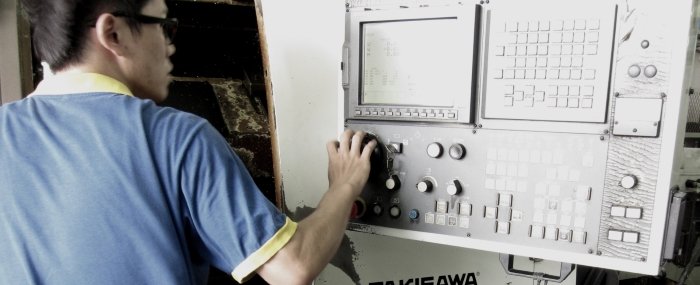
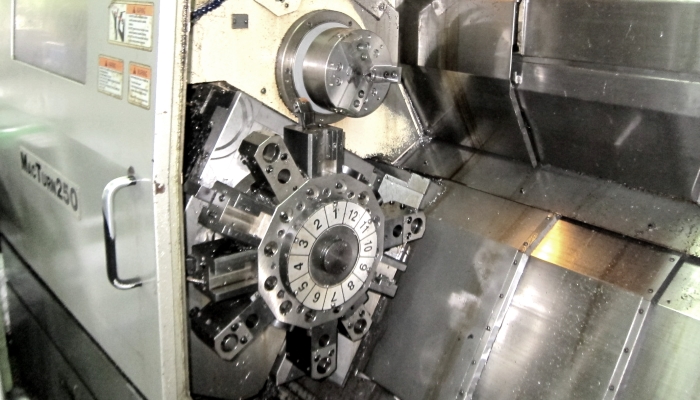
If you are sourcing turning parts with tight OD/ID control, threads, grooves, or concentric features, our CNC lathe and Swiss-type turning centers are set up for both low-volume pilots and repeat production.
Need a fast response? Send your CAD drawing through our QuoteBOT or RFQ form for a project review.
What Are CNC Turning Parts?
CNC turning parts are typically cylindrical or rotationally symmetric components produced on a CNC lathe. The workpiece rotates while cutting tools shape the outside diameter, inside diameter, faces, tapers, threads, and grooves.
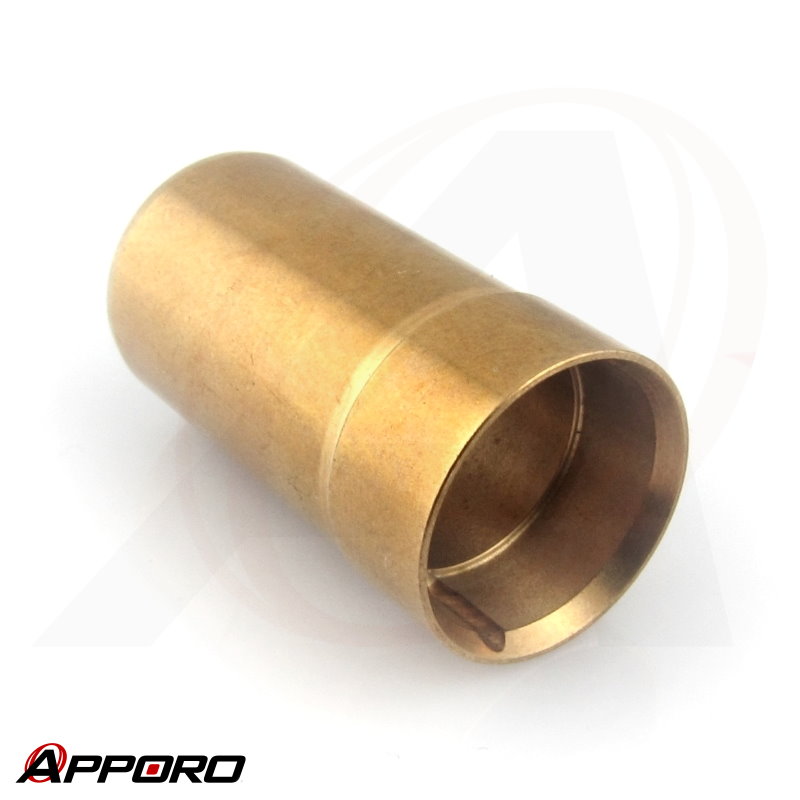
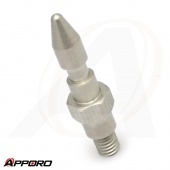
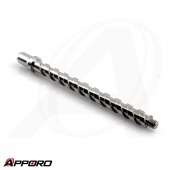
Common turning parts include shafts, bushings, sleeves, spacers, pins, threaded fasteners, fittings, knobs, valve cores, and connectors. Compared with milling-only processes, CNC turning is often the most efficient way to hold round geometry, concentricity, and surface finish on rotational parts.
APPORO also supports mill-turn features when flats, cross-holes, or driven-tool operations are required on the same turned blank—reducing secondary setups and improving accuracy.
CNC Turning Capability and Materials
Our CNC turning service covers fixed-head and sliding-head (Swiss-type) turning centers for small-diameter precision parts as well as larger chucking work. Typical capabilities include:
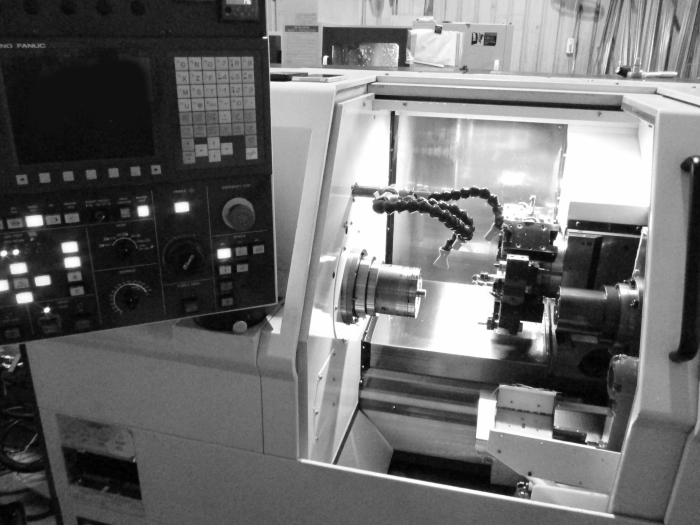
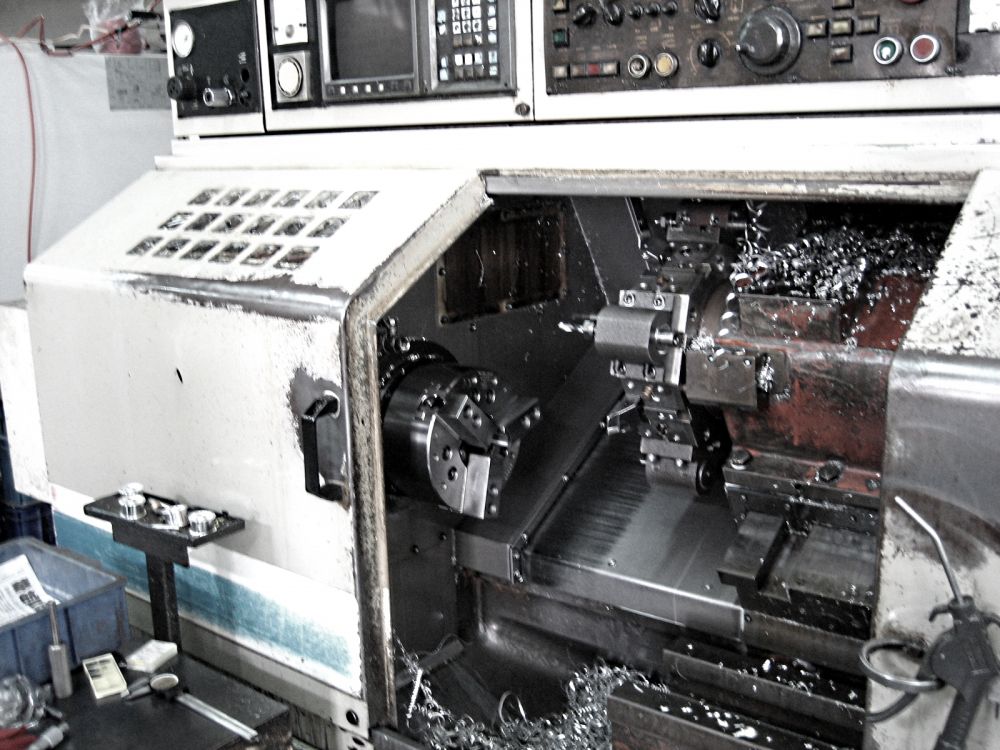
- OD / ID turning, facing, grooving, parting, and taper turning
- Internal and external threading (metric, UNC/UNF, pipe threads, and special forms)
- Drilling, boring, reaming, and knurling
- Live tooling for flats, cross-holes, and selected milling features
- Prototype, low-volume, and repeat production runs
Materials commonly machined for CNC turning parts include stainless steel (303, 304, 316/316L, 420), aluminum alloys (6061, 7075), brass and bronze, carbon and alloy steels, titanium, and engineering plastics such as POM/Delrin, PEEK, and PTFE.
For equipment details, see our CNC lathe machining capability and related CNC lathe machining parts showcase.
Typical CNC Turning Parts We Manufacture
APPORO manufactures custom CNC turning parts for industrial, medical, analytical, automation, and commercial assemblies. Examples include:
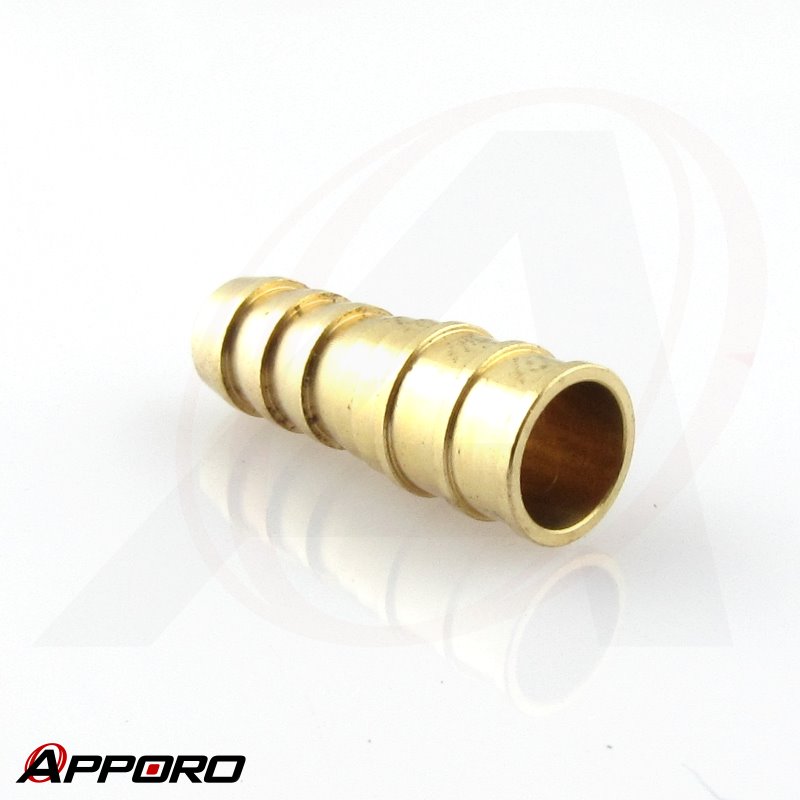
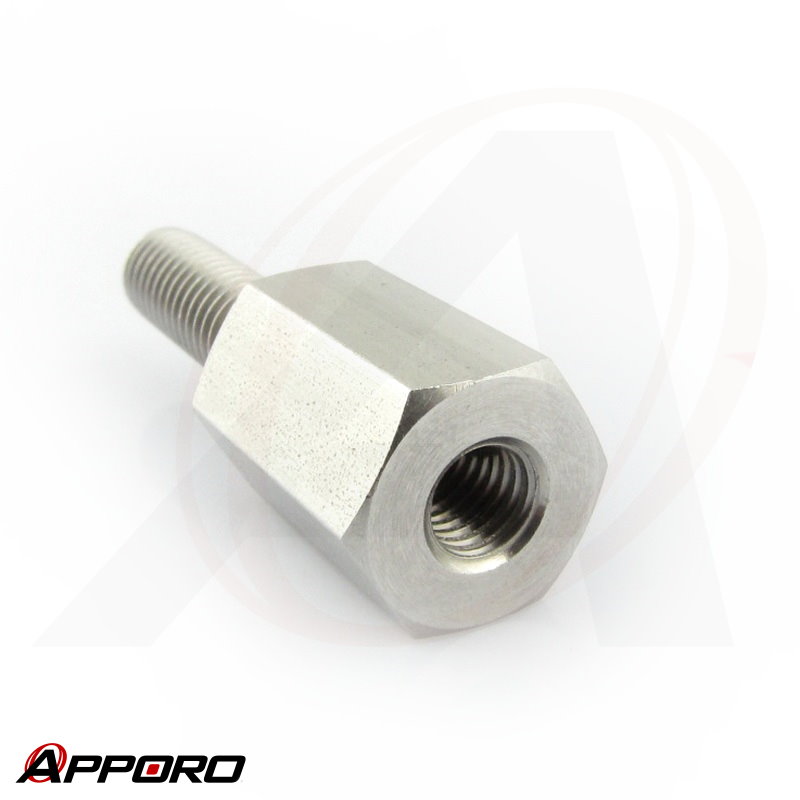
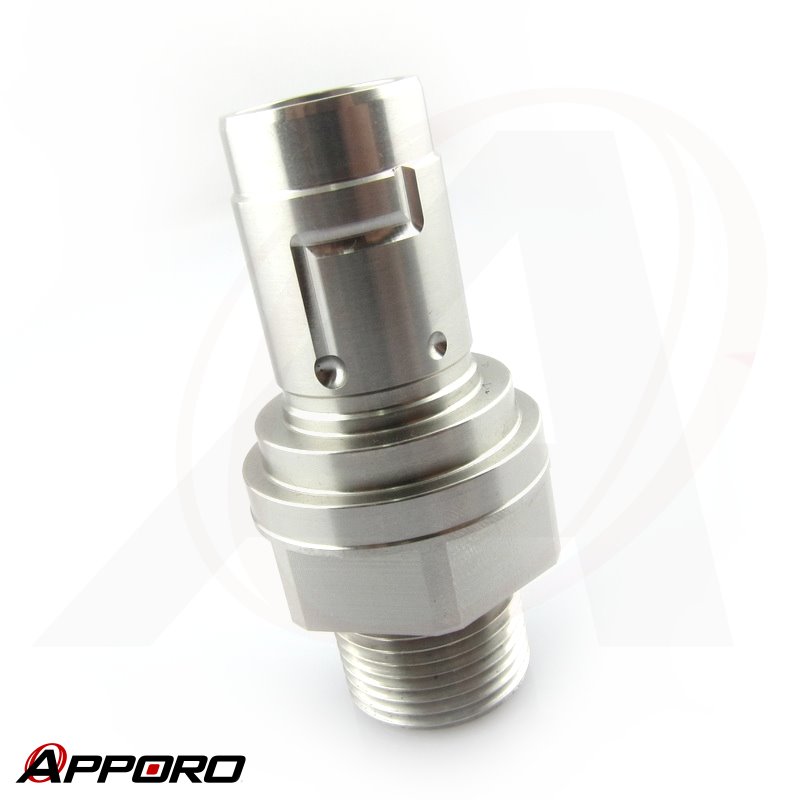
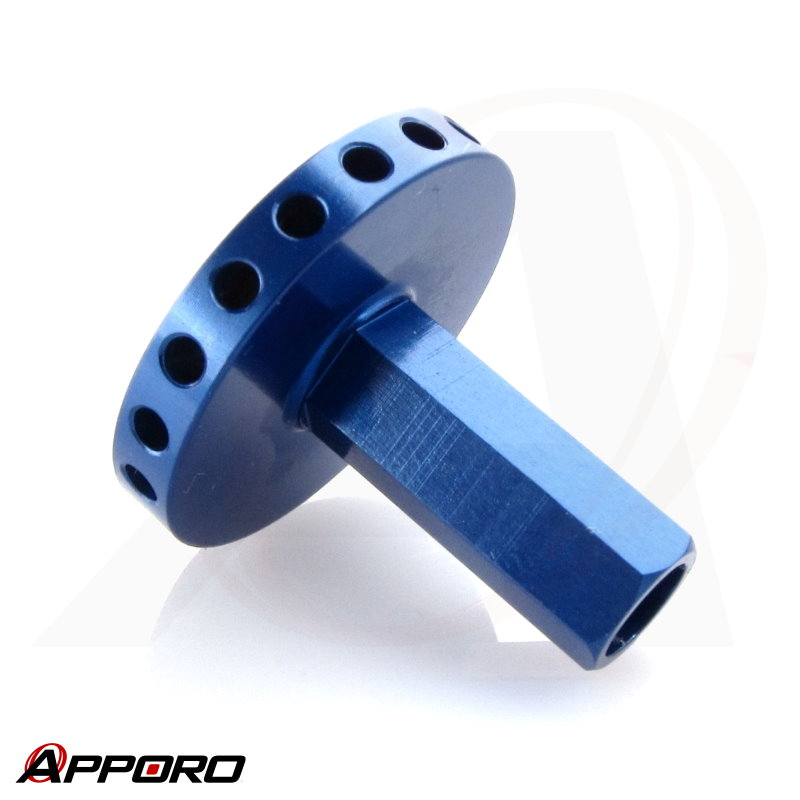
- Precision shafts, rollers, and axles
- Bushings, sleeves, spacers, and collars
- Threaded rods, standoffs, couplings, and fittings
- Hose barbs, connectors, and fluid-handling components
- Knobs, pins, valve bodies, and sealing-related turned parts
Every drawing is reviewed for manufacturability before production. We check critical diameters, thread specifications, surface finish, concentricity, and inspection methods so the quoted process matches real assembly requirements.
Related project experience is available in our case study: CNC turning parts for market sectors.
Turning Experience from Our Case Studies
The notes below are summarized from published APPORO case studies. Each point stays close to what those articles already document, with links to the full write-ups.
Materials and typical turning parts
In our case study on CNC turning parts for market sectors, common CNC turning shafts are described for multi-function printers, scanners, and driving shafts for torque transmission. Where high-torque wear resistance is required, the article notes alloy steel with case hardening or carburizing. For CNC turning screws, materials listed include brass C3604, copper C11000, stainless steel 303 / 304 / 316L, aluminum alloy 2011 and 6061-T6, and titanium alloy. The same article also covers titanium turning work for sectors such as aerospace, medical instruments, biomedical devices, biotechnology, and analytical chemistry, and states that APPORO uses 4-axis CNC lathe machines for CNC machined parts.
Internal and external threads on turned parts
For inner threads on CNC turning machines, our fluteless tap case study explains that APPORO generally uses taper/second/bottoming three-step tapping or fluteless (form) tapping. Fluteless tapping forms the thread by plastic deformation; the article states the resulting inner thread has higher strength and less pitch-diameter error, and that fluteless taps are mainly used for aluminum, brass, and zinc parts. It also notes a known issue—split crest on the thread top—related to the initial pre-drill hole diameter.
Our thread cutting tools selection guide adds that pitch diameter is commonly checked with the Three Wire Method or thread gauges. It recommends thread tapping for threads smaller than M5 when an internal threading tool is limited by small inside diameter, and records an example where tapping broke in an M2 blind hole of an aluminum alloy component, with fluteless tapping offered as an alternative. For external threads that must pass a destructive tensile test on a low-carbon steel demonstrative component, the guide states thread rolling was adopted for strength.
Surface finish decisions on cylindrical turned parts
In a project for cylindrical stainless steel parts used in automotive assembly with epoxy bonding (adhesive bonding case study), the client required higher friction on the OD while keeping end faces at Ra 0.8 μm or better. The article documents that selective sandblasting of the OD only was difficult in production, and that re-machining ends after full sandblasting could raise cost by about 20–30% per part. Simply increasing lathe feed from 0.1 mm/rev to 0.3 mm/rev was judged unlikely to meet adhesive benchmarks. APPORO instead cut fine helical “glue grooves” on the OD with a 60-degree threading insert (about 0.05–0.1 mm depth, 0.5–1.0 mm pitch) inside the primary lathe cycle. The case study reports about 15–25% more effective surface area (preliminary profilometer measurements), 30–40% higher bond strength versus smooth-turned samples in pull-off tests per ASTM D4541, and full-scale production of 5,000 units with zero defects related to surface finish.
When lathe cutting is not the best process
Not every spacer or bushing should stay on the lathe. In our square tube bushing case study, iron bushings of 10.0 × 10.0 × 10.0 mm with 1.0 mm wall thickness were first cut on a CNC automatic lathe from 3-meter square tube. Parting left burrs on the hole edges; tumbling compressed burrs inward and reduced internal square hole width (example given: from 8.0 mm to 7.6 mm or less). With annual demand of 6,000–10,000 pieces, the team recommended powder metallurgy instead. The published outcome includes about 40–50% per-unit cost savings, lead time cut by about 60%, and labor cut by about 80%, with burr-free, more repeatable parts.
Read the full case studies for photos and process detail. For a review of your own CNC turning drawing, use QuoteBOT or our RFQ form.
Why Choose APPORO for CNC Turning
Buyers choose APPORO for CNC turning services when they need more than a commodity quote:
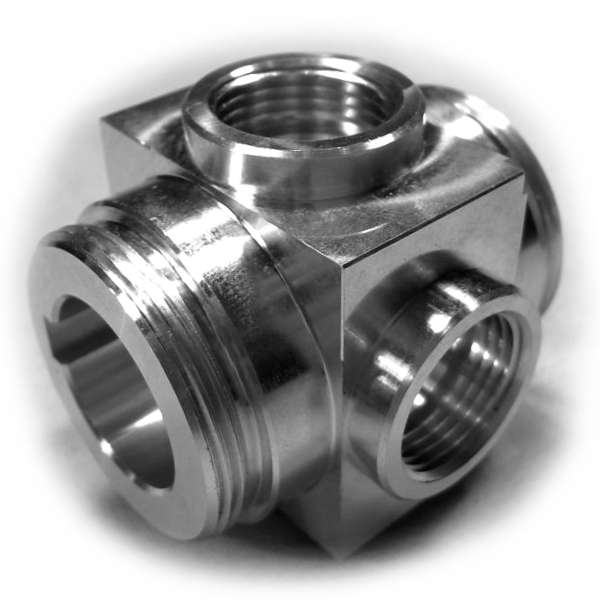
- Taiwan OEM experience with Japanese and Taiwanese CNC turning centers for stable process control
- Engineering communication in English for DFM, tolerance clarification, and revision control
- Quality systems aligned with ISO 9001 practices, dimensional inspection, and report support
- Flexible volumes from first-article samples to ongoing production of turning parts
- Global shipping with clear packaging and delivery arrangement
Learn more about working with us on the Why Choose APPORO CNC Services page.
Request a Quote for CNC Turning Parts
To quote your CNC turning parts accurately, please provide:
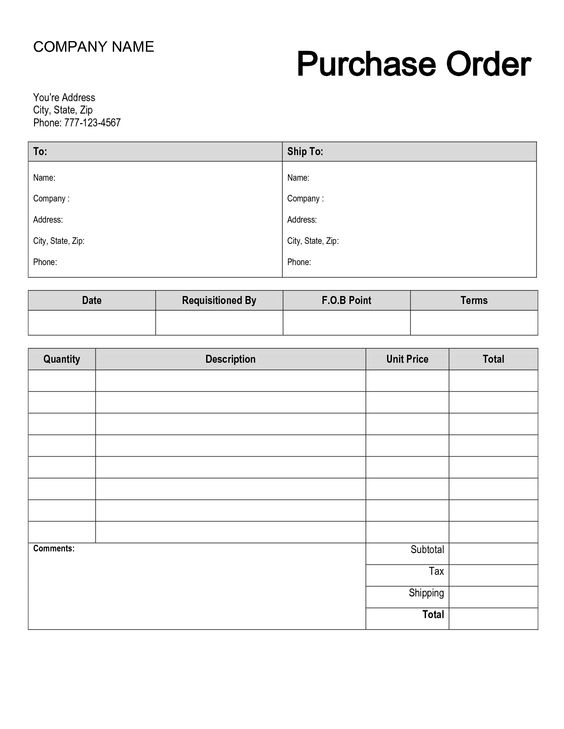
- 3D CAD (STEP / IGS preferred) and 2D drawing (PDF / DWG) with tolerances
- Material, quantity, surface finish, and heat treatment or plating requirements
- Thread specs, critical dimensions, and any inspection or certificate needs
- Target lead time and shipping destination
Start now with QuoteBOT for a prompt estimate, or submit a full RFQ. Our team will review manufacturability and recommend a practical CNC turning process for your part.
APPORO Ind. Corp., Ltd. — Taiwan OEM partner for precision CNC turning services and custom turning parts.