



Residual stress is an inherent force resulting from the plastic injection molding process. The stress mark occurs when the molten polymer is cooled and shaped. Sometimes, residual stress is purposely formed to obtain desirable characteristics, such as in oriented PET films and bottles. However, in most cases, these stresses can be potential causes of field failures.
How does the stress mark occur to a plastic part?
Problems caused by residual stress in plastic parts generally fall into some of the following categories:
1.) Cracking:
Cracking under normal load conditions can be strong evidence of internal residual stress. You will observe many micro cracks on the product surface.
2.) Distortion:
Distortion occurs when plastic parts with excessive residual stress go through post-processing thermal cycles, such as sterilization, ultrasonic welding or heat sealing. Moreover, products exposed to various ambient temperatures in transportation or warehousing are likely to distort as well. The parts may warp or shrink, leading to unpleasant packaging failures.
3.) Aggravation of optical properties:
Marks caused by residual stress change the refractive index, introducing optical distortion. This can be harmful for the surface appearance of products such as bottles, windows, plastic lenses, and monitor screens.
Generally speaking, manufacturing a flawless plastic injection part requires high-quality polymer powder, proper temperature, pressure and time control. Below is a photo of precision thin-walled plastic part made of polypropylene. It shows how residual stress causes marks on plastic parts due to excessive holding time. In this case, we built a family mold with one cavity for each part. We intended to do the injection with superior quality for the other item, so we increased injection pressure to up to 80 kg/sq. cm, holding pressure for up to 10 seconds. But we observed an obvious white stress mark on the surface without warning which may induce field failures.
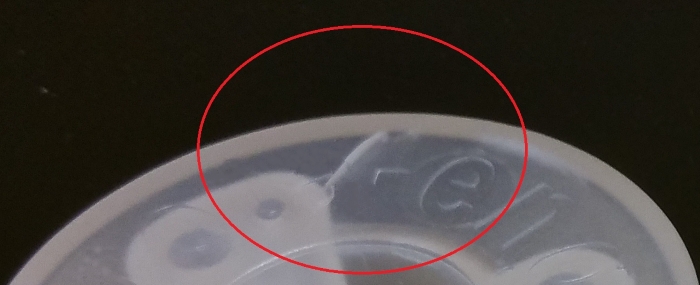
Residual stress causes damage mark to the plastic injection part
How do we avoid stress marks on plastic injection parts similar to the case mentioned above? This part was damaged, with cracks or stress marks on its surface. These cracks and marks might arise from different cooling rates, inconsistent temperature or flow rate, material contaminants, mechanical loading, thermal cycling during transport and storage, inadequate or non-uniform annealing, and sharp corners or protrusion designs. During troubleshooting, we dealt with the issues one by one. Finally, we found the best way to avoid the cracks or marks on precision injection plastics parts is to reduce the holding pressure duration to 2 to 3 seconds.
Check out our previous plastic injection project on our website! Diagnose the residual stress before it ruins your parts. Feel free to send us your RFQ for project review.